Styling a trench coat: what to look for and how to wear it
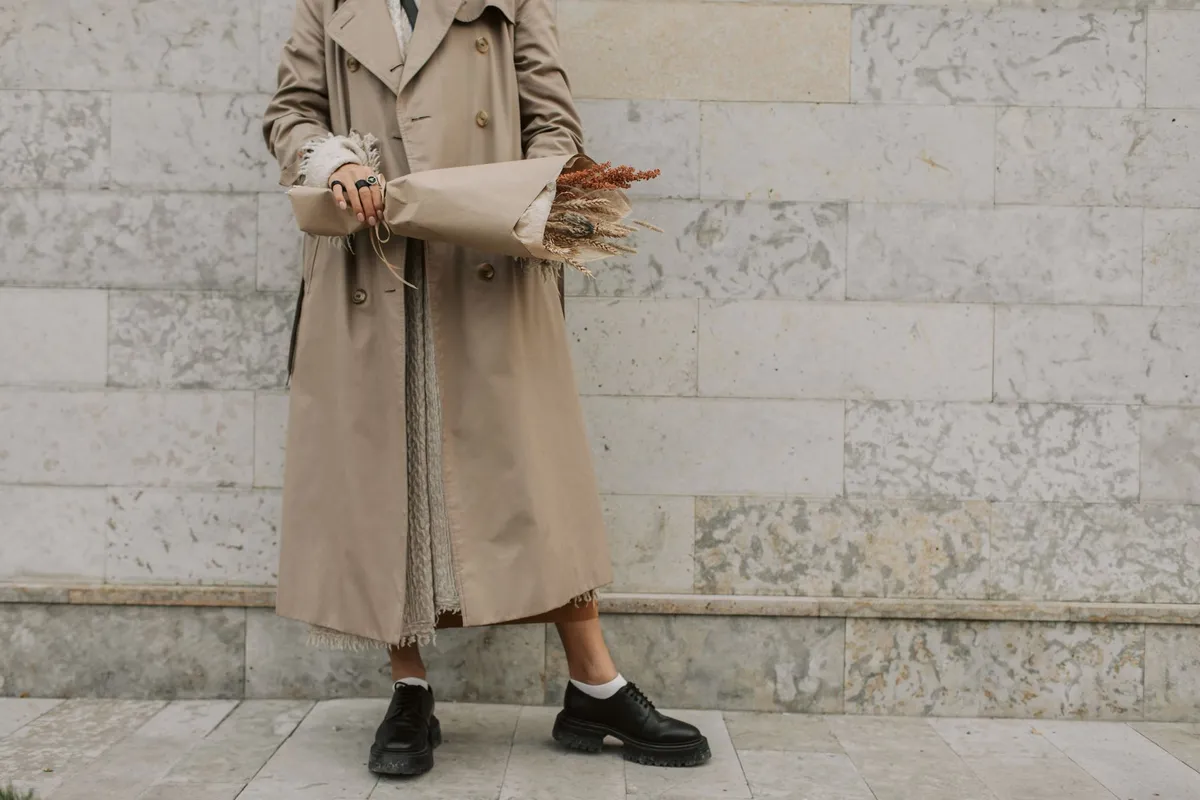
Few garments are as versatile as a trench coat. It works over a suit or a summer dress, with trainers or heels, in light rain and on cool evenings. In a climate as changeable as Belgium’s, it is often the coat you reach for most between the heavy winter coat and summer. Here is what makes a good one and how to wear it through the seasons.
A coat with a military past
The trench coat takes its name from the trenches of the First World War, where officers wore water-resistant coats in tightly woven cotton. Many of its details had practical purposes at the time, and they survive today as part of the classic design. After the war, the trench moved into civilian wardrobes and, through films and fashion, became the timeless piece it is today.
The classic details
| Detail | What it is |
|---|---|
| Double-breasted front | Two rows of buttons, for extra protection against wind and rain |
| Storm flap | An extra layer of fabric on the shoulder at the front |
| Back yoke | A cape-like layer across the upper back that helps water run off |
| Epaulettes | Shoulder straps, originally functional |
| Belt with D-rings | Belted waist with metal rings |
| Cuff straps | Adjustable straps at the wrists to keep out the wind |
| Raglan or set-in sleeves | Raglan sleeves give more freedom of movement |
Not every trench has all of these details. Single-breasted, collarless or unbelted versions are simpler and more modern. Choose according to your taste and how much structure you want.
What to look for when buying
Fabric
Traditional trench coats are made of tightly woven cotton gabardine, which is water-resistant rather than fully waterproof. Many modern trenches use cotton blends or technical fabrics. Check the label and feel the weight: a good trench has body and holds its shape, but does not feel stiff.
Fit
- Shoulders: the seam should sit at the edge of your shoulder, unless it is a deliberately oversized or raglan style.
- Room underneath: try it on over a jumper or blazer. You should be able to move your arms freely.
- Length: knee-length is the most versatile; a long trench looks dramatic, and a short one suits petite frames and casual outfits.
- Sleeves: they should reach the base of your thumb, covering the cuffs of a shirt.
Colour
Beige and stone are the classics and go with almost everything. Navy, black and olive are good alternatives, especially if beige washes out your complexion. A black trench fits naturally into a monochrome capsule wardrobe.
Ways to wear it
Belted
Tie the belt at the waist for a defined silhouette. Rather than buckling it, many people knot the belt loosely at the front or the side, which looks more relaxed. Leave the coat open above the belt for a softer line.
Open and loose
Let the coat hang open, with the belt tied behind your back or hanging loose. It creates a long vertical line that works especially well over a simple base of jeans and a T-shirt.
Over the shoulders
Draping the trench over your shoulders without putting your arms through the sleeves is a polished look for short moments, such as arriving at a restaurant. It is not practical for walking far.
Outfit ideas through the seasons
Spring
- Trench + white T-shirt + straight jeans + white trainers. See our guide to white sneakers.
- Trench + striped top + cropped trousers + loafers.
- Trench + light knit dress + ankle boots.
Summer evenings
- Trench over a slip dress with sandals.
- Trench with linen trousers and a simple vest top.
Autumn
- Trench + fine roll-neck + tailored trousers + leather boots.
- Trench + chunky knit + jeans + a leather bag. For layering ideas, read our guide to autumn layering.
At work
A trench over a blazer and trousers is a classic commuter combination. It is one of the core coats in our guide to building a work wardrobe.
Accessories
A printed silk scarf knotted at the neck is the classic companion, especially with beige. Our article on ways to tie a scarf has several options. A structured leather bag and simple jewellery complete the look.
Caring for a trench coat
- Check the care label: many cotton trenches should be dry cleaned, though some can be washed. See our guide to reading clothing care labels.
- Brush off dirt and spot clean small marks.
- Hang it on a wide hanger to support the shoulders, and fasten the belt so it does not get lost.
- If the coat gets wet, let it dry naturally on a hanger at room temperature.
Looked after well, a good trench coat will stay in your wardrobe for many seasons, and it rarely goes out of style.
This article may contain partner links. They never influence what we write.